|
PLEASE ADD TO OUR BLOG. CLICK HERE.
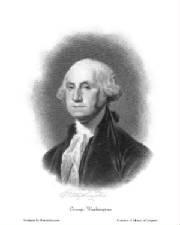
George Washington's farwell speech:
“…Let me now take a more comprehensive view, and warn you in the most solemn manner
against the baneful effects of the spirit of party generally. This spirit, unfortunately, is inseparable from our nature,
having its root in the strongest passions of the human mind. It exists under different shapes in all governments, more or
less stifled, controlled, or expressed; but in those of the popular form it is seen in its greatest rankness and is truly
their worst enemy.…It serves always to distract the public councils and enfeeble the public administration. It agitates
the community with ill-founded jealousies and false alarms; kindles the animosity of one part against another; foments occasionally
riot and insurrection. It opens the door to foreign influence and corruption, which find a facilitated access to the government
itself through the channels of party passion. Thus the policy and the will of one country are subjected to the policy and
will of another. There is an opinion that parties in free countries are useful checks upon the administration of government,
and serve to keep alive the spirit of liberty. This within certain limits is probably true; and in governments of a monarchical
cast patriotism may look with indulgence, if not with favor, upon the spirit of party. But in those of the popular character,
in governments purely elective, it is a spirit not to be encouraged. From their natural tendency it is certain there will
always be enough of that spirit for every salutary purpose; and there being constant danger of excess, the effort ought to
be by force of public opinion to mitigate and assuage it. A fire not to be quenched, it demands a uniform vigilance to prevent
its bursting into a flame, lest, ifnstead of warming, it should consume. It is important, likewise, that the habits of thinking
in a free country should inspire caution in those intrusted with its administration to confine themselves within their respective
constitutional spheres, avoiding in the exercise of the powers of one department to encroach upon another. The spirit of encroachment
tends to consolidate the powers of all the departments in one, and thus to create, whatever the form of government, a real
despotism. A just estimate of that love of power and proneness to abuse it which predominates in the human heart is sufficient
to satisfy us of the truth of this position.… If in the opinion of the people the distribution or modification of the
constitutional powers be in any particular wrong, let it be corrected by an amendment in the way which the Constitution designates.
But let there be no change by usurpation; for though this in one instance may be the instrument of good, it is the customary
weapon by which free governments are destroyed. The precedent must always greatly overbalance in permanent evil any partial
or transient benefit which the use can at any time yield."(1)
(1)
Microsoft ® Encarta ® Reference Library 2005. © 1993-2004
Microsoft Corporation. All rights reserved. UNDER CONSTRUCTION WE'RE UNDER CONSTRUCTION
|